
In the modern era of mobility, the portable power bank has evolved from a luxury accessory to a fundamental necessity. However, as energy density increases, so do the stakes for safety and reliability. For global importers, brand owners, and distributors, understanding the “black box” of battery technology is not just about specs—it is about risk management and brand reputation.
At Honghao Electronics, we have spent years at the forefront of the power solutions industry, specializing in everything from PCBA design to the mass production of long-range wireless chargers and high-capacity power banks. In this guide, we will peel back the casing and explore the intricate science of battery safety.
1. The Anatomy of a Power Bank: More Than Just Cells
Every power bank consists of three core components: the Battery Cell, the PCBA (Printed Circuit Board Assembly), and the Chassis.
The Battery Cell: The Energy Core
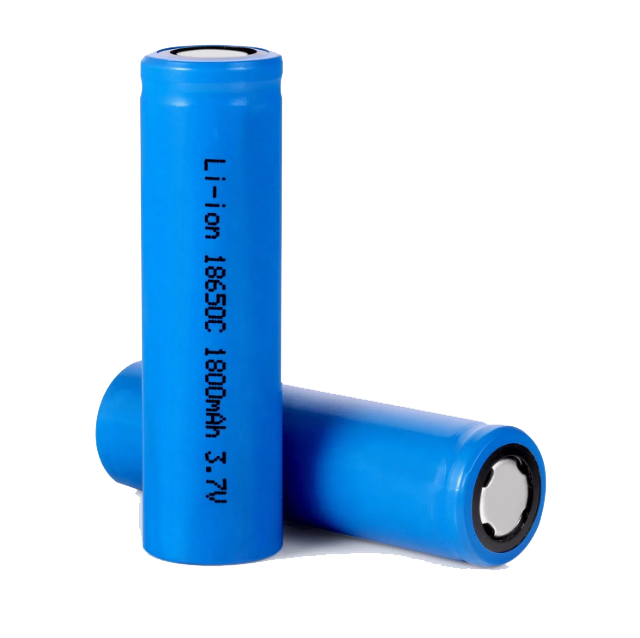
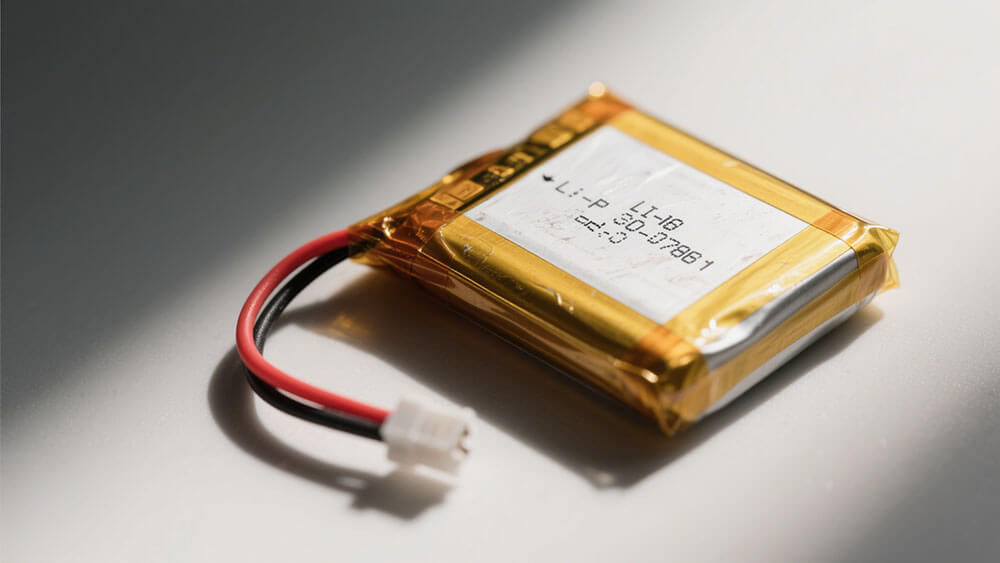
Most modern power banks use either Lithium-ion (18650) or Lithium-polymer (Li-Po) cells.
-
18650 Cells: Cylindrical, durable, and cost-effective. They are often used in high-capacity rugged power banks.
-
Lithium-polymer: Flat and flexible, allowing for the slim, sleek designs seen in premium wireless charging pads and smartphone-sized banks.
The PCBA: The “Brain” of the Device
This is where Honghao Electronics excels. A battery is a chemical reaction waiting to happen; the PCBA is what keeps that reaction controlled. A high-quality PCBA manages voltage regulation, thermal monitoring, and communication protocols (like PD 3.0 or QC 4.0).
2. The Science of Safety: Understanding the Risks
To understand safety, we must understand the primary enemy: Thermal Runaway. This occurs when an internal short circuit or external heat causes a cell to release its energy instantly, leading to fire or explosion.
What causes battery failure?
-
Internal Short Circuits: Often caused by “dendrites”—tiny needle-like structures that grow inside the battery due to poor manufacturing or improper charging.
-
Overcharging: Pushing voltage beyond the cell’s limit causes the electrolyte to decompose, generating gas and pressure.
-
Physical Impact: Dropping a power bank can deform the internal separator, leading to a catastrophic short.
3. The Honghao Electronics Advantage: Engineering for Zero Failure
Why do top-tier global brands choose Honghao Electronics for their PCBA and finished product needs? It comes down to our Multi-Layer Protection Logic.
Advanced BMS (Battery Management System)
Our proprietary PCBA designs include a sophisticated BMS that monitors the “State of Health” (SoH) and “State of Charge” (SoC) in real-time.
-
Over-current Protection (OCP): Automatically shuts down the circuit if the draw exceeds safe limits.
-
Over-voltage Protection (OVP): Prevents damage from faulty wall adapters.
-
NTC Temperature Sensors: We embed Negative Temperature Coefficient thermistors directly against the cells. If the temperature exceeds 45°C during charging, the system throttles the speed. If it hits 60°C, it cuts power entirely.
4. PCBA Production: The Secret to Long-Term Reliability
Many suppliers outsource their PCBA, leading to inconsistent quality. At Honghao Electronics, we treat PCBA production as an art form.
SMT Precision and Quality Control
Low-quality soldering can lead to high resistance, which generates heat. Our SMT (Surface Mount Technology) lines ensure that every capacitor, resistor, and IC is placed with micron-level precision.
AOI Testing: Every board undergoes Automated Optical Inspection.
Functional Aging: We don’t just test if it “turns on.” We stress-test the boards under load to ensure longevity.
5. Wireless Charging Safety: A New Frontier
As a leader in Under-Desk Wireless Chargers and Multi-functional Wireless Charging Sockets, we face unique safety challenges. Wireless charging generates more ambient heat than wired charging.
Foreign Object Detection (FOD)
What happens if a user places a coin or a key on a wireless charger? Without FOD, the induction coil would heat that metal object until it melts the plastic casing. Our wireless products feature high-sensitivity FOD algorithms that detect non-mobile device interference within milliseconds.
Long-Distance Charging Stability
Our invisible wireless chargers utilize a specialized resonance frequency that penetrates up to 10-35mm of tabletop material without overheating the surface. This is achieved through high-Q factor coils and precision-tuned PCBA.
6. Global Certification: Meeting International Standards
If you are selling in the US, Europe, or Japan, “safety” isn’t just a claim—it’s a legal requirement. Honghao Electronics ensures all products are ready for:
-
UL 2054 / UL 1642: The gold standard for battery cell and pack safety.
-
CE/RoHS: Ensuring environmental compliance and safety for the European market.
-
UN38.3: Crucial for air transport safety.
7. How to Identify a High-Quality Supplier
When vetting a partner for your electronics brand, ask these three questions:
Do you design your own PCBA? (Honghao does, ensuring full control over safety logic).
What grade of cells do you use? (We only use Grade A, high-cycle-life cells).
Can you provide a Full-Load Ripple Test report? (This proves the stability of the power output).
Conclusion: Partner with the Experts
A power bank is more than just a plastic case with a battery inside. It is a complex piece of engineering that requires a deep understanding of chemistry, physics, and electrical design. At Honghao Electronics, we combine our manufacturing prowess in PCBA production with innovative designs in wireless charging to provide our global partners with products that are safe, efficient, and market-ready.
Don’t compromise on safety. Choose a partner with the technical depth to protect your brand.