
In the fast-evolving world of wireless power, the transition from Qi1 to Qi2 marks the most significant leap since the Wireless Power Consortium (WPC) first introduced the Qi standard in 2008. For technology companies, distributors, and consumer electronics brands, understanding the technical nuances between these two protocols is no longer optional—it is essential for staying competitive.
As a leading producer in the wireless charging sector, Honghao has witnessed firsthand how the shift toward Qi2 is reshaping the landscape of PCBA design, multi-function power stations, and portable power solutions. This article provides a comprehensive technical breakdown of the differences between Qi1 and Qi2 and what they mean for the future of charging.
1. The Genesis: From Qi1 to Qi2
Before diving into the “how,” we must understand the “why.” Qi1 served us well for over a decade, but it had a fatal flaw: Misalignment. If a smartphone was placed even a few millimeters off-center on a charging pad, efficiency plummeted, and heat skyrocketed.
Qi2 was developed to solve this by incorporating Apple’s MagSafe technology into an open, universal standard. By adopting the Magnetic Power Profile (MPP), Qi2 ensures that every device snaps into the perfect position every time.
2. Technical Comparison: Qi1 vs. Qi2 at a Glance
| Feature | Qi1 (BPP/EPP) | Qi2 (MPP) |
| Primary Standard | Baseline/Extended Power Profile | Magnetic Power Profile (MPP) |
| Max Power Output | 5W – 15W (Often throttled) | 15W – 25W (Sustained) |
| Alignment Method | Manual / Multi-coil | Mandatory Magnetic Alignment |
| Charging Efficiency | 60% – 75% | 85% – 90%+ |
| Heat Generation | High (due to misalignment) | Low (optimized thermal path) |
| Foreign Object Detection | Basic | Advanced (High-resolution) |
| PCBA Complexity | Standard | High (Requires magnetic integration) |
3. The Core Advantage: Magnetic Power Profile (MPP)
The most striking difference is the MPP. While Qi1 relied on the Extended Power Profile (EPP), which required the user to guess where the coil was located, Qi2 uses a ring of magnets to lock the transmitter and receiver coils in perfect symmetry.
Why this matters for PCBA Production:
At Honghao, our PCBA engineering team focuses on the precise calibration of these magnetic rings. In Qi1, we often had to use multi-coil designs to compensate for poor alignment, which increased the footprint and cost of the circuit board. With Qi2, the magnetic lock allows for a more compact, single-coil PCBA that delivers superior performance without the bulk.
4. Power Delivery and Thermal Management
A common misconception is that “both Qi1 and Qi2 support 15W, so they are the same.” This is far from the truth.
Qi1 (EPP): While rated for 15W, Qi1 chargers often throttle down to 7.5W or 5W after 10 minutes because the heat generated by misalignment triggers safety sensors.
Qi2: Because the coils are perfectly aligned, energy waste (which turns into heat) is minimized. This allows Qi2 devices to maintain a sustained 15W (and now up to 25W in Qi2.2) for the duration of the charge cycle.
For our clients looking at Under-desk Wireless Chargers or Multi-function Power Sockets, this thermal efficiency is critical. Reduced heat means longer component life and safer operation in integrated furniture environments.
5. Universal Compatibility: The “Android MagSafe” Moment
For years, magnetic charging was a “walled garden” for iPhone users. Qi2 breaks those walls. Qi2 is designed to be cross-platform. In 2026, we are seeing a massive surge in Android manufacturers adopting Qi2-certified hardware. This means a single high-quality charger from Honghao can now serve both an iPhone 17 and a flagship Samsung or Google device with the same magnetic precision.
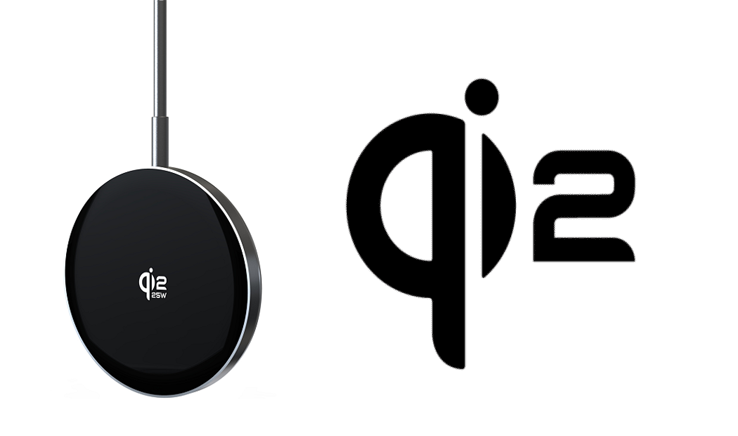
6. Beyond the Phone: Multi-function and Portable Power
The evolution from Qi1 to Qi2 isn’t just about charging pads. It affects the entire ecosystem:
Multi-function Charging Sockets
Traditional power strips are being replaced by integrated hubs. By moving from Qi1 to Qi2 PCBA modules, these sockets can now support vertical or angled magnetic mounts, turning a simple outlet into a functional workstation stand.
Magnetic Power Banks
The Qi2 standard has revolutionized the Power Bank industry. Older Qi1 power banks were prone to sliding off in a pocket or bag. Qi2’s 9N to 12N magnetic force ensures the power bank stays attached, maintaining charging speed even while the user is on the move.
7. Is Qi1 Obsolete?
Not entirely. Qi1 remains a cost-effective solution for:
Low-power wearables (earbuds, smartwatches).
Budget-friendly promotional tech.
Legacy device support.
However, for any brand aiming at the mid-to-high-end market, Qi2 is the new baseline.
8. Why Partner with Honghao (泓浩) for your Qi2 Transition?
Navigating the technical requirements of the WPC (Wireless Power Consortium) and ensuring Qi2 certification can be complex. Honghao provides a streamlined pathway for global brands:
Expert PCBA Design: We specialize in high-efficiency Qi2 PCBA layouts that optimize thermal dissipation and magnetic interference.
Integrated Solutions: From under-desk hidden chargers to sophisticated multi-function sockets, we integrate Qi2 technology into everyday utility products.
Strict Quality Control: Every unit undergoes rigorous testing to ensure it meets international safety standards (CE, FCC, RoHS, and Qi2 certification).
OEM/ODM Flexibility: Whether you need a finished retail product or a custom PCBA for your own housing, our production lines are equipped to scale with your needs.
Ready to upgrade your product line to Qi2?
[Contact Honghao today] for a technical consultation and discover how our wireless charging solutions can elevate your brand in the global market.