
In the competitive world of consumer electronics and smart home accessories, “Integrated Power” is the newest gold rush. Products like the 3-in-1 Wireless Charging Sockets—which combine AC outlets, USB ports, and wireless charging pads into a single compact device—are flying off the shelves.
For B2B buyers, distributors, and private label brands, these products represent the ultimate convenience for the modern consumer. However, this high level of integration comes with a massive engineering responsibility.
When you pack high-voltage AC power, sensitive DC USB circuits, and magnetic resonance wireless charging into a small enclosure, the margin for error disappears. Today, we look at why opting for cheap, low-quality versions of these integrated solutions is a gamble that could cost you your entire brand reputation.
1. The Engineering Nightmare: The “Crowded” PCBA
In a standard wall outlet, space isn’t an issue. But in a multifunctional desktop socket, the PCBA (Printed Circuit Board Assembly) is incredibly crowded.
A high-quality integrated socket, like the Hong Hao (泓浩) series, uses a multi-layer, partitioned PCB design. This ensures that the 110V/220V AC current is physically and electrically isolated from the 5V/9V DC charging circuits.
The Cheap Alternative Trap: Low-cost manufacturers often use single-layer boards with insufficient spacing (creepage distance) between high-voltage and low-voltage sections.
The Result:
- A single power surge or even high humidity can cause an “arc-over,” sending 220V of electricity directly into a customer’s smartphone through the USB cable or wireless coil. This doesn’t just kill the phone; it creates a lethal shock hazard.
2. Thermal Runaway: Three Heat Sources, One Small Box
Heat is the enemy of electronics. In an integrated 3-in-1 device, you have three distinct heat generators:
AC Resistance:
- Heat from high-current appliances plugged into the sockets.
USB Transformation:
- The AC-to-DC conversion process (Switching Mode Power Supply) generates heat.
Wireless Induction:
- Wireless charging is inherently inefficient, losing 20-30% of energy as heat.
The Cheap Alternative Trap: To save money, budget factories use low-grade capacitors and MOSFETs with high internal resistance. They also skip thermal pads or heat sinks.
The Result:
- When a user is charging their laptop via USB, their phone via wireless, and running a lamp via the AC outlet, the internal temperature can skyrocket. This leads to “thermal runaway,” where components melt, the plastic housing deforms, or in the worst cases, the unit catches fire.
3. Electromagnetic Interference (EMI): The Silent Performance Killer
Wireless charging relies on a precise magnetic frequency. USB-C Power Delivery (PD) relies on high-speed data handshakes between the charger and the phone.
The Cheap Alternative Trap: High-quality PCBAs include EMI shielding and filtering components (like X/Y capacitors and inductors) to keep these signals clean. Cheap boards strip these out to save cents.
The Result:
The wireless charger becomes unstable, constantly connecting and disconnecting. The USB ports might cause “phantom touches” on the smartphone screen, making the phone unusable while charging. For a B2B brand, this leads to a flood of “Product Defective” returns and 1-star reviews.
4. The Global Compliance Minefield
Selling power products in North America, Europe, or Australia requires strict certifications (UL, ETL, CE, FCC, RoHS).
The Cheap Alternative Trap: Many low-cost factories provide “fake” certificates or send a high-quality sample for testing while using cheaper components for the actual mass production run.
The Result:
- If a product causes a fire or is caught during a random customs audit, the
importer of record (your brand)
is legally liable. You could face massive fines, a total recall of all sold units, and a permanent ban from major retail platforms like Amazon or Wayfair.
5. Protecting Your Brand: The “Hong Hao” Standard
At Hong Hao (泓浩), we believe that power solutions should be invisible, convenient, and above all, unfailingly safe. Our integrated wireless charging sockets are engineered with a “Safety-First” PCBA architecture:
Premium Component Selection:
- We use long-life solid capacitors and high-efficiency controller ICs to minimize heat.
True Isolation Technology:
- Our PCB layouts feature strict isolation barriers to ensure high-voltage AC never meets low-voltage DC.
Intelligent Foreign Object Detection (FOD):
- Our wireless modules instantly detect keys or coins and shut down to prevent overheating.
Full Lifecycle Testing:
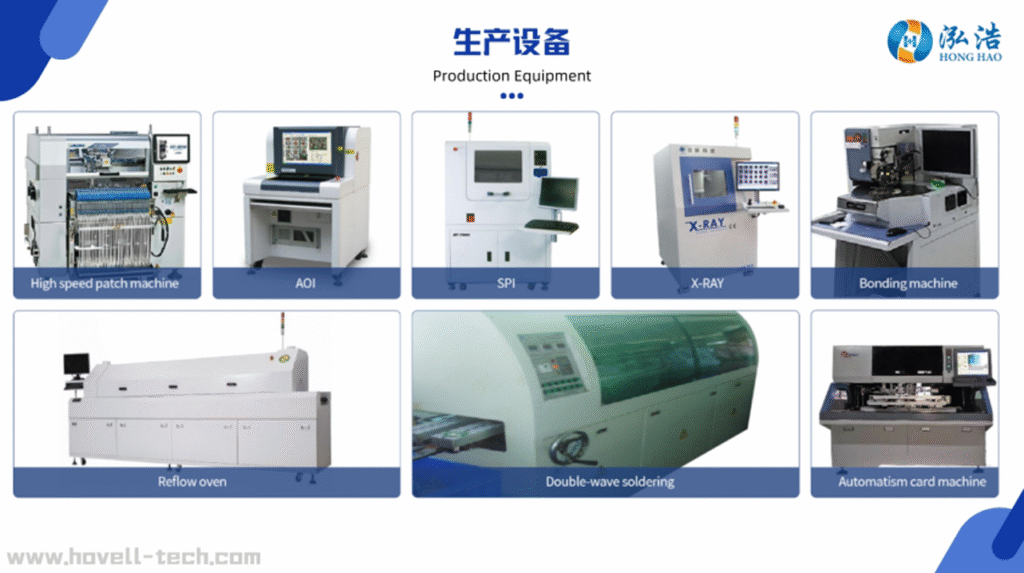
Every batch undergoes high-load burn-in testing and automated optical inspection (AOI) before leaving the factory.
At a Glance: Cheap Alternative vs. Hong Hao Standard
| Feature / Dimension | The Cheap Alternative Trap | The Hong Hao (泓浩) Standard |
| PCBA Architecture & Design | • Uses single-layer boards . • Insufficient spacing (creepage distance) between high-voltage and low-voltage sections. | • Multi-layer, physically and electrically partitioned PCB design . • Strict isolation barriers ensure 110V/220V AC never meets low-voltage DC. |
| Component Selection & Thermal Management | • Uses low-grade components (capacitors/MOSFETs) with high internal resistance . • Skips thermal pads or heat sinks to cut costs. | • Premium long-life solid capacitors and high-efficiency controller ICs to minimize heat . • Intelligent Foreign Object Detection (FOD) shuts down power for keys/coins to prevent overheating. |
| EMI & Signal Stability | • Strips out essential EMI shielding and filtering components (X/Y capacitors and inductors) to save cents. | • Includes dedicated EMI shielding and filtering components to keep wireless frequencies and USB PD data handshakes clean. |
| Compliance & Quality Control | • Provides “fake” certificates or uses high-quality samples for testing while downgrading mass production runs. | • Fully compliant with global standards (UL, ETL, CE, FCC, RoHS) . • Full lifecycle testing: high-load burn-in testing and Automated Optical Inspection (AOI) for every batch. |
| User Experience & Performance | • Unstable wireless charging with constant disconnections . • USB ports cause “phantom touches” on smartphone screens, rendering the phone unusable while charging. | • Delivers an invisible, convenient, and unfailingly safe charging experience . • Consistent, high-performance power delivery. |
| Safety Risks & Brand Impact | ❌ Brand Destruction & Liability: • High risk of “arc-over” from power surges or humidity, sending 220V into devices, creating lethal shock hazards . • Severe thermal runaway leads to melted components, deformed plastic, or fires . • Leads to massive fines, total product recalls, and a permanent ban from major platforms like Amazon or Wayfair. | Trust & Brand Protection: • Engineered with a “Safety-First” architecture to protect your users and devices . • Drastically reduces “Product Defective” returns and 1-star reviews . • Safeguards your brand reputation and builds a long-term business that lasts. |
Don't Compromise on the Core
Your brand is built on trust. While a cheaper unit price might look attractive on a spreadsheet, the long-term cost of a single safety incident is immeasurable.
When choosing a manufacturing partner for multifunctional sockets and integrated wireless chargers, look past the plastic shell. Look at the PCBA, the protection circuits, and the engineering integrity.
Ready to elevate your product line with safe, high-performance integrated power?
[Contact our Engineering Team] for a deep dive into our PCBA designs or to request a sample of our certified 3-in-1 wireless charging sockets. Let’s build a brand that lasts.