
Power banks have become one of the most widely used portable electronic accessories. Whether for smartphones, tablets, wireless earbuds, or other USB-powered devices, they provide convenient backup power wherever people go.
However, one issue continues to concern both consumers and manufacturers: battery swelling.
A swollen power bank is more than a cosmetic problem. It usually indicates internal battery damage and may lead to reduced performance, shortened lifespan, or, in severe cases, overheating and fire hazards.
Understanding why power banks swell is important for users, retailers, and manufacturers alike. This article explains the technical reasons behind battery swelling, the risks involved, and how better engineering and quality control can significantly reduce these failures.
What Is a Swollen Power Bank?
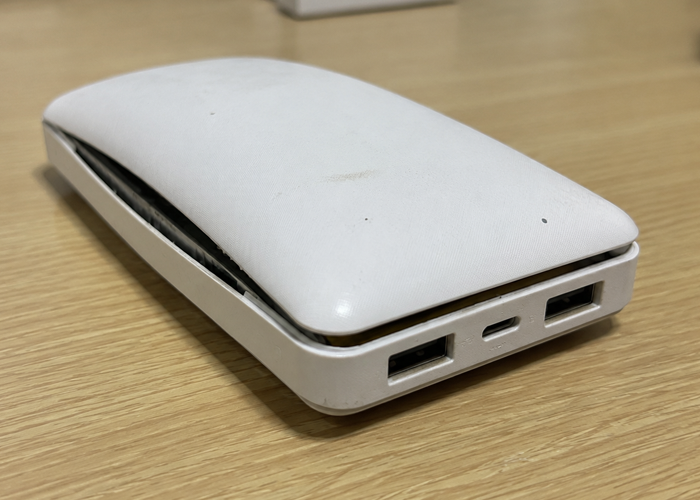
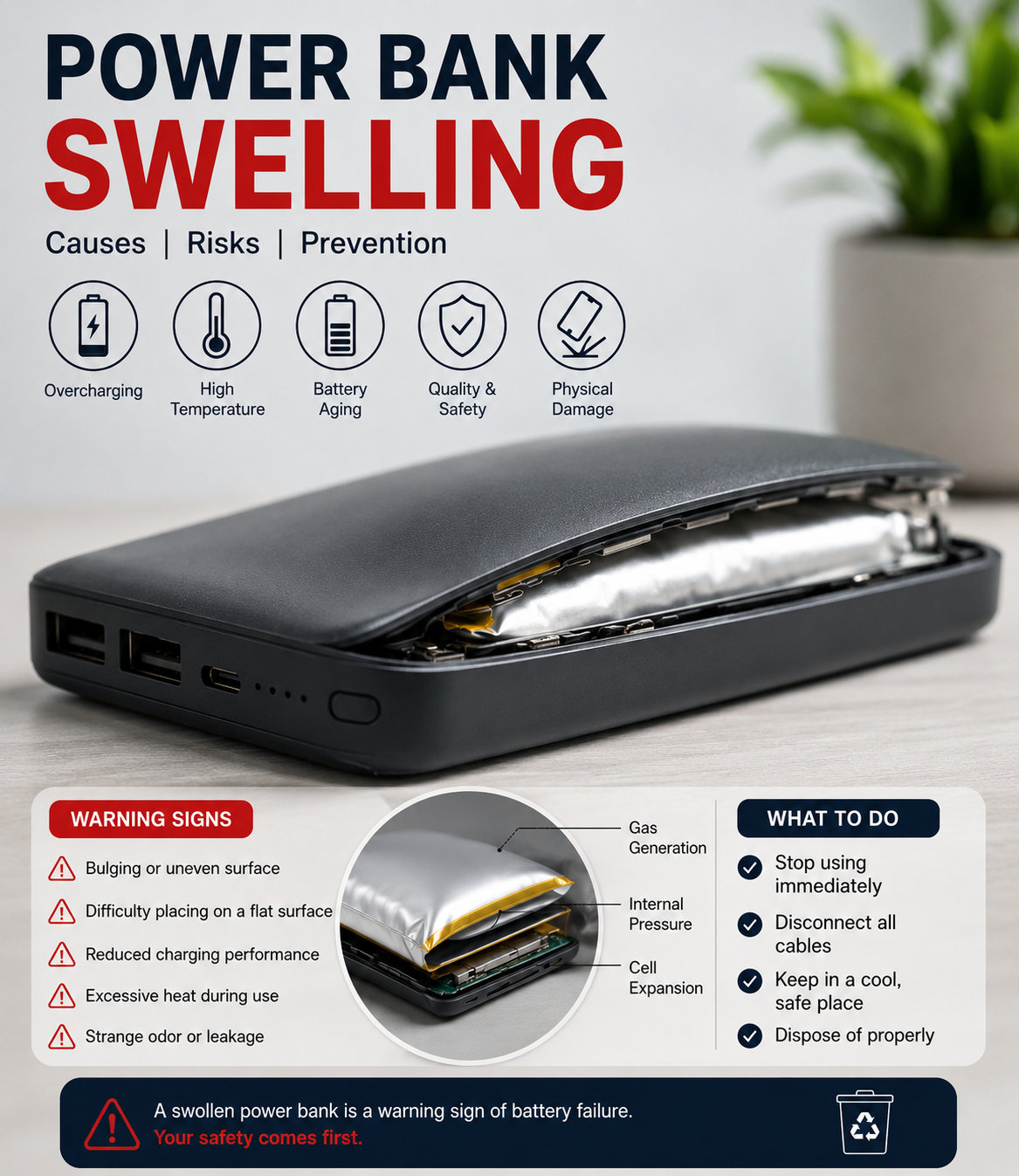
Battery swelling occurs when the lithium-ion or lithium-polymer cell expands due to gas generation inside the battery.
Unlike ordinary wear, swelling is generally a sign that irreversible chemical reactions have taken place. The battery no longer operates under normal conditions and should not continue to be used.
Common symptoms include:
- A bulging or uneven housing
- Difficulty placing the power bank on a flat surface
- Separation of the enclosure
- Reduced charging capacity
- Excessive heat during charging or discharging
Even slight swelling should be taken seriously.
Why Do Lithium Batteries Swell?
Several factors can contribute to battery swelling. In most cases, the problem results from the gradual breakdown of internal battery materials.
1. Battery Aging
Every lithium battery has a limited cycle life.
After hundreds of charge and discharge cycles, electrolyte decomposition becomes more likely. Chemical reactions produce gases that cannot escape from the sealed battery cell, causing it to expand.
Older batteries naturally face a higher risk of swelling.
2. Overcharging
Modern power banks include battery management systems (BMS) to prevent overcharging.
However, if:
- the protection circuit fails
- poor-quality components are used,
- or incompatible chargers create abnormal charging conditions
the battery voltage may exceed safe limits.
Excessive voltage accelerates electrolyte decomposition and gas generation.
3. High Temperature
Heat is one of the biggest enemies of lithium batteries.
Common examples include:
- Leaving a power bank inside a parked car.
- Continuous fast charging under direct sunlight.
- Charging while covering the device with blankets or clothing.
- Operating in poorly ventilated environments.
High temperatures speed up chemical aging and significantly shorten battery life.
4. Low-Quality Battery Cells
Not all battery cells are manufactured to the same standards.
Lower-cost cells may have:
- higher internal resistance,
- inconsistent electrode coating,
- poor separator quality,
- lower purity materials.
These defects increase internal stress during charging and discharging, making swelling more likely over time.
Premium battery manufacturers invest heavily in material consistency and production control to minimize these risks.
5. Physical Damage
Dropping or crushing a power bank can damage internal battery layers even when no external cracks are visible.
Mechanical deformation may cause:
- separator damage,
- internal short circuits,
- localized heating,
- accelerated gas formation.
A damaged battery should never continue to be used.
6. Manufacturing Defects
Although modern production lines maintain strict quality control, defects can still occur if manufacturing standards are insufficient.
Examples include:
- contamination during cell assembly,
- improper electrolyte filling,
- welding defects,
- poor sealing.
Reliable manufacturers perform multiple inspection stages, including X-ray inspection, electrical testing, aging tests, and final safety verification.
What Happens Inside a Swollen Battery?
A lithium battery contains:
- positive electrode
- negative electrode
- separator
- electrolyte
When abnormal chemical reactions occur, electrolyte decomposition creates gases such as carbon dioxide, carbon monoxide, and small hydrocarbon compounds.
Because the battery casing is sealed, these gases accumulate internally.
As pressure rises:
- the battery expands
- electrode layers become distorted
- internal resistance increases
- charging efficiency decreases
- additional heat is generated
This creates a cycle that further accelerates battery degradation.
Is a Swollen Power Bank Dangerous?
Yes.
Although not every swollen battery catches fire, swelling indicates that the battery has entered an abnormal operating condition.
Potential risks include:
- overheating
- electrolyte leakage
- internal short circuit
- thermal runaway
- fire
- smoke generation
The larger the swelling becomes, the higher the safety risk generally becomes.
Warning Signs Users Should Never Ignore
Many power banks provide early warning signs before severe swelling occurs.
Watch for:
- noticeable bulging
- charging becomes unusually slow
- battery drains rapidly
- unusual heat
- strange chemical odor
- enclosure opening by itself
- clicking or popping sounds
Once these symptoms appear, continued use is not recommended.
What Should You Do If Your Power Bank Swells?
Safety should always come first.
Recommended actions include:
- Stop using the power bank immediately.
- Disconnect it from all chargers and devices.
- Do not puncture or squeeze the swollen battery.
- Store it in a cool, dry place away from flammable materials.
- Take it to an authorized battery recycling or hazardous waste collection facility.
- Never throw swollen lithium batteries into household trash.
Proper disposal helps prevent environmental contamination and reduces fire risks.
How Manufacturers Reduce Swelling Risks
High-quality power banks rely on more than just premium battery cells.
Reliable manufacturers optimize the entire system.
Intelligent Battery Management System (BMS)
Modern BMS solutions continuously monitor:
- charging voltage,
- discharge current,
- battery temperature,
- over-current protection,
- short-circuit protection.
The goal is to keep the battery operating within safe limits.
High-Quality Cell Selection
Leading manufacturers carefully evaluate suppliers based on:
- cycle life,
- capacity consistency,
- internal resistance,
- safety certification,
- long-term stability.
Strict incoming inspection helps eliminate defective cells before production begins.
Thermal Design
Good thermal management reduces heat accumulation.
Design improvements include:
- optimized PCB layout,
- heat-dissipation materials,
- ventilation structure,
- balanced charging current.
Lower operating temperatures generally improve battery longevity.
Production Quality Control
Comprehensive manufacturing processes often include:
- incoming material inspection,
- automated welding,
- aging tests,
- capacity verification,
- safety testing,
- appearance inspection.
Consistent quality control reduces product variation and improves long-term reliability.
Tips for Extending Power Bank Life
Consumers can also reduce swelling risks through proper usage.
Best practices include:
- Avoid leaving power banks in hot vehicles.
- Use certified charging adapters and cables.
- Avoid completely draining the battery frequently.
- Recharge every few months during long-term storage.
- Keep the device dry and clean.
- Avoid severe impacts.
- Replace aging power banks after years of heavy use.
Proper maintenance cannot eliminate battery aging but can significantly slow it.
Looking Ahead: Safer Portable Power
Battery technology continues to improve.
New developments include:
- higher-quality lithium materials,
- more accurate battery monitoring,
- improved thermal management,
- smarter charging algorithms,
- enhanced safety certification standards.
Although no rechargeable battery lasts forever, engineering improvements continue to reduce failure rates while increasing safety and reliability.
Manufacturers that prioritize battery quality, intelligent protection, and rigorous testing are better positioned to deliver products that perform consistently throughout their service life.
Conclusion
Battery swelling is the result of complex electroche manufacturing, and low-quality battery cells can all contribute to gas generation inside lithium batteries.
For consumers, recognizing the warning signs and replacing swollen power banks promptly is essential for safety.
For manufacturers, investing in high-quality battery cells, reliable battery management systems, effective thermal design, and comprehensive quality control remains the most effective way to minimize swelling risks and improve product reliability.
As portable electronics continue to evolve, battery safety will remain one of the most important factors influencing product quality, customer satisfaction, and long-term brand reputation.