
A Finished Product Isn’t Always Ready to Ship
An electronic product can look completely finished.
The PCB has been assembled.
The housing is installed.
The screen turns on.
The buttons work.
It looks ready to go.
But before that product is placed into a box and shipped to a customer, there is still an important stage:
Making sure it is actually ready to leave the factory.
A product that works once isn’t necessarily a product that is ready for mass shipment.
Before shipping, manufacturers need to verify that the product meets its design requirements, functions consistently, and passes the necessary quality checks.
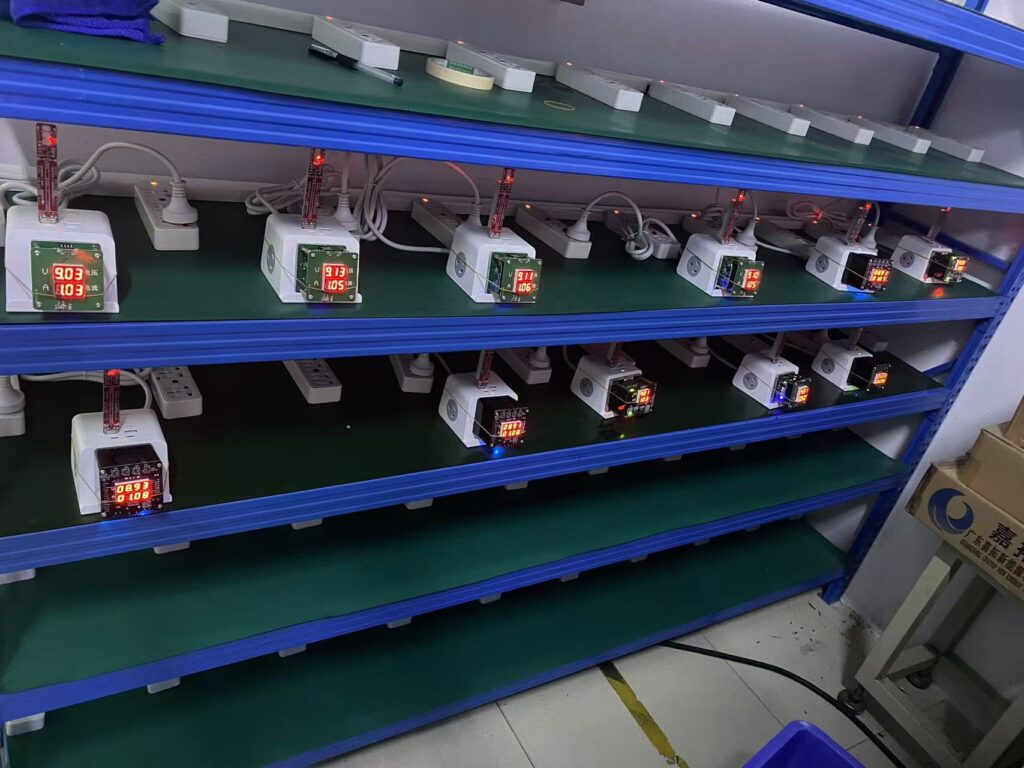
First, The Product Has to Be Built Correctly
The process starts much earlier than the final inspection.
Components need to be correctly placed on the PCB.
Solder joints need to be properly formed.
Connectors need to be installed correctly.
The right components need to be used in the right positions.
For SMT production, automated equipment helps place components accurately and consistently, but manufacturing still requires process control.
Small production problems can create larger problems later.
A component that is incorrectly placed may affect circuit performance.
A poor solder joint may cause intermittent failures.
A damaged component may not fail immediately but could create problems during operation.
That’s why manufacturing quality begins on the production line—not at the shipping table.
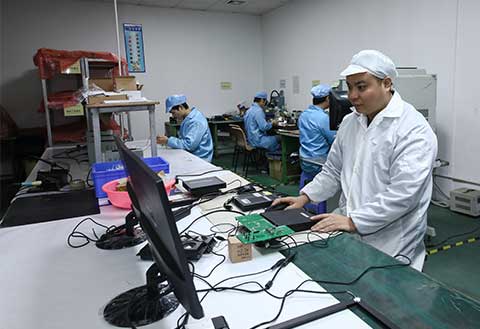
Then Comes Functional Testing
Once the product has been assembled, it needs to prove that it actually works.
The exact tests depend on the product.
For an electronic device, testing may include:
- Power-on testing
- Voltage and current checks
- Functional operation
- Button or interface testing
- Charging performance
- Communication functions
- Wireless functions
- Protection functions
The purpose is straightforward:
Find problems before the product reaches the customer.
Testing isn’t just about confirming that something turns on.
A product may power up while another part of the system is not functioning correctly.
That’s why testing needs to be based on the actual requirements of the product.
Appearance Matters Too
Electronic products aren’t judged only by their circuits.
Customers also see the physical product.
Before shipping, manufacturers may inspect the housing, connectors, surfaces, labels, assembly condition, and other visible details.
They may look for things such as:
- Scratches
- Cracks
- Assembly gaps
- Loose parts
- Incorrect labels
- Surface defects
- Contamination
These issues may not affect the basic electrical function, but they still matter.
A product represents both its manufacturer and its brand.
Quality is not only about whether the circuit works.
It’s also about whether the finished product meets the expected standard.
Not Every Test Happens at the End
One common misunderstanding is that quality control happens only after production is finished.
In reality, good manufacturing involves multiple checkpoints.
Components can be inspected before production.
The SMT process can be monitored during assembly.
PCBA can be tested after assembly.
The finished product can then go through functional and appearance inspection.
This layered approach helps identify problems earlier.
Finding a problem during production is generally more useful than discovering it after hundreds or thousands of units have already been completed.
The earlier a problem is found, the easier it is to control.
Consistency Is Just as Important as Function
Imagine producing one electronic device.
It works perfectly.
That’s good.
Now imagine producing 1,000 units.
The challenge changes.
The question becomes:
Will all 1,000 units perform consistently?
Mass production requires repeatability.
Component placement needs to remain stable.
Soldering quality needs to remain consistent.
Test standards need to remain consistent.
Assembly processes need to remain controlled.
This is why manufacturing engineering is so important.
A good product isn’t simply one that works.
It’s one that can be produced repeatedly with predictable results.
Reliability Requires More Than One Test
Some problems don’t appear immediately.
A device may work normally during a short functional test but behave differently after extended operation.
Depending on the product and application, manufacturers may therefore perform additional reliability-related checks.
These can involve operating the product under defined conditions and checking whether it continues to perform as expected.
The exact testing requirements vary from product to product.
There is no single test that can prove everything.
Instead, manufacturers build a testing process around the product’s actual risks and requirements.
Final Inspection Before Packing
After production and testing are complete, the product can move toward final inspection.
This is where several pieces of information come together.
Has the product passed its functional tests?
Does the appearance meet the required standard?
Are the correct components and accessories included?
Is the product properly assembled?
Are labels and packaging correct?
Only after these checks are completed should the product move into final packaging.
The box may look like the final step.
But from a manufacturing perspective, it’s the result of many previous steps working together.
Packaging Is Part of the Product Journey
Even after a product passes its tests, it still needs to survive transportation.
Packaging therefore has a practical purpose.
It needs to protect the product from impacts, vibration, dust, and other conditions that may occur during handling and transportation.
The packaging also needs to contain the correct accessories, documentation, labels, and product information.
A perfectly manufactured product can still arrive in poor condition if it isn’t packaged appropriately.
So the manufacturing process doesn’t truly end when the circuit works.
It ends when the finished product is ready to reach the customer.
What Happens When Something Fails?
Quality control isn’t only about passing products.
It’s also about dealing with products that don’t pass.
If a unit fails a test, it should be identified and separated rather than simply moving forward with the rest of the shipment.
The manufacturer may then investigate the cause.
Was it a component problem?
A soldering issue?
An assembly error?
A design problem?
A testing issue?
The answer matters because fixing one defective unit is only part of the job.
The larger goal is to understand whether the same problem could affect other units.
This is where manufacturing experience becomes especially valuable.
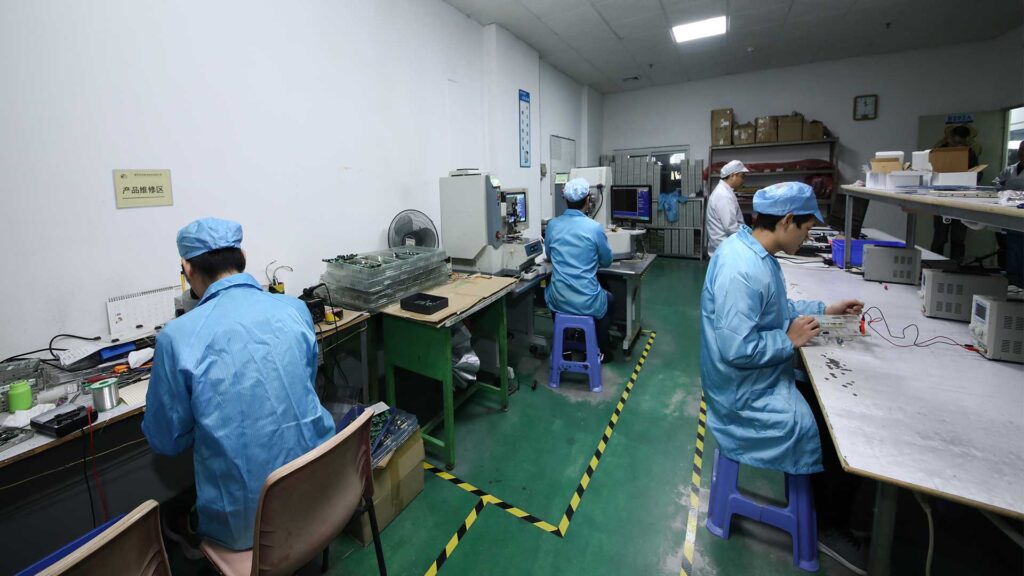
Final Thoughts
Before an electronic product ships, much more happens than simply putting it into a box.
Components are assembled.
PCBs are inspected.
Functions are tested.
Appearance is checked.
Production processes are monitored.
Quality standards are verified.
Products that don’t meet the requirements are identified and handled before shipment.
The goal isn’t to make the manufacturing process complicated for the sake of it.
The goal is simple:
Make sure the product leaving the factory is the product the customer expected to receive.
And in mass production, consistency matters just as much as functionality.
A product that works once is a prototype success.
A product that works consistently across thousands of units is a manufacturing achievement.
About Honghao Electronics
At Honghao Electronics, we understand that reliable electronic products are built through controlled processes, not just good designs.
From product development and PCBA to SMT assembly, functional testing, inspection, and quality control, we support the process from prototype development through mass production.
Each stage provides an opportunity to identify problems, improve consistency, and ensure the finished product meets the required specifications.
Because before an electronic product reaches the customer, quality needs to be built into every step—not checked only at the end.