
More Power Doesn’t Always Mean More Danger
Imagine plugging a 100W charger into a smartphone designed for much lower charging power.
It sounds dangerous.
If the charger can deliver 100W, will it force 100W into the phone?
Could the battery overheat?
Could the charging circuit be damaged?
The answer is usually no.
Modern charging systems are designed to prevent exactly this kind of situation.
A charger rated at 100W doesn’t automatically push 100W into every device connected to it.
Instead, the charger and the device typically communicate to determine how much power should actually be delivered.
That’s an important distinction:
A charger’s maximum power is not the same as the power your device will receive.
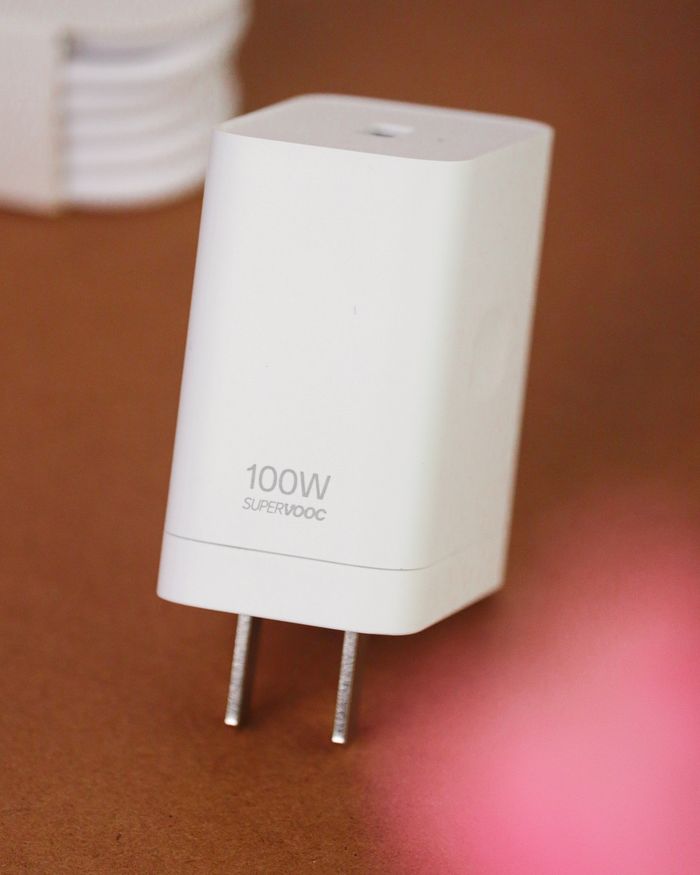
What Does “100W Charger” Actually Mean?
When you see a charger labeled 100W, that number generally describes its maximum supported output under specified conditions.
It doesn’t mean the charger continuously delivers 100W.
Think of it more like the capacity of a power source.
A 100W charger may be capable of supplying:
- 5W
- 15W
- 30W
- 65W
- 100W
depending on the connected device and charging protocol.
If your smartphone only requests 20W, the charger doesn’t simply force the remaining 80W into it.
The charging system regulates the power according to what the device can accept.
This is one of the fundamental principles behind modern charging technology.
How Does the Charger Know How Much Power to Deliver?
Modern charging isn’t simply a matter of connecting positive and negative electrical terminals.
Many charging systems use communication protocols that allow the charger and device to negotiate power.
For example, technologies such as USB Power Delivery (USB PD) allow compatible devices to communicate their power requirements.
The process is roughly:
Charger → Available power profiles
Device → Required power
System → Agreed charging level
The actual process is more sophisticated than this simplified example, but the basic idea is important.
The charger provides power within the limits supported by the system.
The device doesn’t simply accept unlimited power.
What If the Charger Really Does Provide Too Much?
This is where protection systems become important.
Electronic devices are designed with specific operating ranges.
If voltage or current exceeds safe limits, the system needs to respond.
Modern charging circuits may include protections against:
- Overvoltage
- Overcurrent
- Short circuits
- Overtemperature
- Abnormal charging conditions
If something goes outside the expected range, the system can reduce power or stop charging altogether.
This is why charging safety isn’t based on a single component.
It depends on multiple layers of protection working together.
Voltage and Current Are Not the Same Thing
To understand excessive power, it helps to understand the basic relationship:
Power = Voltage × Current
For example:
5V × 2A = 10W
9V × 2A = 18W
20V × 5A = 100W
A device may reach higher charging power by increasing voltage, current, or both.
But each component in the charging path has limits.
The charger, cable, charging IC, PCB, connectors, and battery all need to operate within appropriate electrical conditions.
That’s why increasing charging power isn’t simply a matter of “turning up the electricity.”
The entire system has to be designed for it.
What Happens When Voltage Is Too High?
Excessive voltage can be particularly dangerous for electronic components.
Most semiconductor devices operate within specific voltage ranges.
If voltage exceeds those limits, components can experience electrical stress or permanent damage.
This is why voltage regulation and overvoltage protection are critical parts of charger design.
A properly designed charger should maintain a controlled output and respond appropriately to abnormal conditions.
In other words:
More voltage isn’t simply more power. It’s a different operating condition that the entire system must support.
What Happens When Current Is Too High?
Excessive current creates a different problem.
When current increases, electrical resistance can generate more heat.
One basic relationship engineers consider is:
Power loss = I²R
This means that as current increases, resistive losses can increase rapidly.
That matters for:
- Charging cables
- Connectors
- PCB traces
- Switching components
- Power management circuits
If these parts aren’t designed to handle the required current, heat can build up.
That’s why high-power charging requires careful electrical and thermal engineering.
The Battery Doesn’t Simply “Take Everything”
Another common misconception is that a battery absorbs whatever power the charger provides.
It doesn’t work that way.
The battery is charged through a controlled charging circuit.
The charging system determines how much current and voltage should be applied based on factors such as:
- Battery state of charge
- Battery temperature
- Battery chemistry
- Charging conditions
- Device power requirements
When the battery is relatively empty, the system can generally allow higher charging power.
As the battery approaches full capacity, charging power is reduced.
This controlled process helps manage heat and battery stress.
Why Charging Slows Down Near 100%
This is the same reason your phone might charge very quickly from 20% to 60%, but much more slowly from 90% to 100%.
The charging system doesn’t treat the battery as an empty container that can simply be filled at a constant rate.
Lithium-ion batteries require carefully controlled charging.
As the battery approaches its upper voltage limit, the charging system gradually reduces current.
This helps prevent excessive stress and temperature rise.
So when your phone slows down near 100%, it isn’t necessarily because the charger suddenly became weaker.
The charging system is deliberately changing the charging conditions.
What About a High-Power Charger and a Low-Power Device?
Suppose you have:
100W charger + 20W smartphone
Can you safely connect them?
In a properly designed and compatible charging system, generally yes.
The smartphone doesn’t automatically receive 100W.
Instead, the device requests or accepts an appropriate charging level.
This is one of the advantages of standardized charging protocols.
It allows chargers and devices with different power capabilities to work together more intelligently.
Of course, compatibility and product quality still matter.
A poorly designed or non-compliant charger may not provide the same level of protection.
The Cable Matters Too
There’s another part of the charging system that is easy to overlook:
The cable.
A cable isn’t just a piece of wire.
At higher charging powers, cable resistance, current capacity, connector quality, and thermal behavior become increasingly important.
A cable designed for lower power may not be suitable for every high-power charging application.
That’s why some modern charging systems require cables with appropriate current ratings or identification features.
The charger, cable, and device should be treated as one system.
What Happens When a Fault Occurs?
Imagine something goes wrong during charging.
Perhaps a component fails.
Perhaps the temperature rises unexpectedly.
Perhaps the output becomes abnormal.
A well-designed charging system should detect the problem and respond.
Depending on the system, this could mean:
Power reduction → Protection response → Charging shutdown
The exact behavior depends on the design.
The important point is that modern charging systems are not designed around the assumption that everything will always work perfectly.
They are designed to handle abnormal conditions.
That’s what protection engineering is for.
Why Charger Quality Still Matters
If high-power chargers are designed with protection systems, does charger quality still matter?
Absolutely.
A charger isn’t safe simply because it has a high wattage rating or a familiar connector.
The quality of the internal design matters.
Important factors include:
- Component quality
- PCB layout
- Power conversion efficiency
- Thermal management
- Protection circuits
- Electrical isolation
- Manufacturing consistency
- Product testing
Two chargers can have the same advertised wattage and still have very different internal designs.
The number printed on the package only tells part of the story.
High Power Requires Better Engineering
As charging power increases, engineering challenges increase as well.
Higher power can mean:
- More heat
- Higher current
- Greater component stress
- More demanding PCB design
- Greater thermal requirements
- More complex protection systems
This is why modern high-power charging isn’t simply about making a charger “stronger.”
It requires better control.
Better components.
Better thermal management.
Better testing.
And better manufacturing.
So, Can a Charger Actually “Overpower” Your Phone?
In a properly designed charging ecosystem, simply connecting a higher-wattage charger does not mean the charger will force its maximum power into the phone.
The device and charging system work together to determine an appropriate power level.
Problems become more likely when there is:
- Poor-quality hardware
- Incorrect voltage
- Faulty protection circuits
- Damaged cables
- Incompatible equipment
- Poor manufacturing quality
That’s why charger safety depends on the entire system—not just the wattage printed on the box.
Final Thoughts
A 100W charger may sound powerful enough to damage a small smartphone.
But modern charging technology is much more intelligent than simply pushing electricity into a battery.
The charger provides available power.
The device determines what it can use.
The charging circuit regulates the energy.
Protection systems monitor abnormal conditions.
Thermal management keeps temperatures under control.
And the battery management system adjusts charging as the battery fills.
In other words:
A high-power charger doesn’t have to be dangerous. Poorly controlled power is the real problem.
As charging technology continues to move toward higher power and smaller devices, the challenge will be delivering more energy without compromising safety, efficiency, or reliability.
At Honghao Electronics, we believe reliable charging starts with system-level engineering—from power management and PCB design to component selection, PCBA, SMT manufacturing, testing, and quality control.
Because when it comes to charging, more power is only useful when you can control it.