
Think about the last time you used your phone.
You unlocked it, connected to Wi-Fi, checked your messages, took a photo, and maybe placed it on a wireless charger.
Everything worked.
And because everything worked, you probably didn’t think about any of it.
That’s actually a sign of good technology.
The best engineering often disappears into the background.
You don’t think about the power management system when your phone turns on.
You don’t think about the temperature sensors when your device stays cool.
You don’t think about the PCB when your charger delivers stable power.
You don’t think about the components inside your electronics when everything works exactly as expected.
You only start noticing them when something goes wrong.
A device stops charging.
A screen becomes unresponsive.
A charger gets unusually hot.
A wireless connection suddenly drops.
And suddenly, the invisible technology becomes very visible.
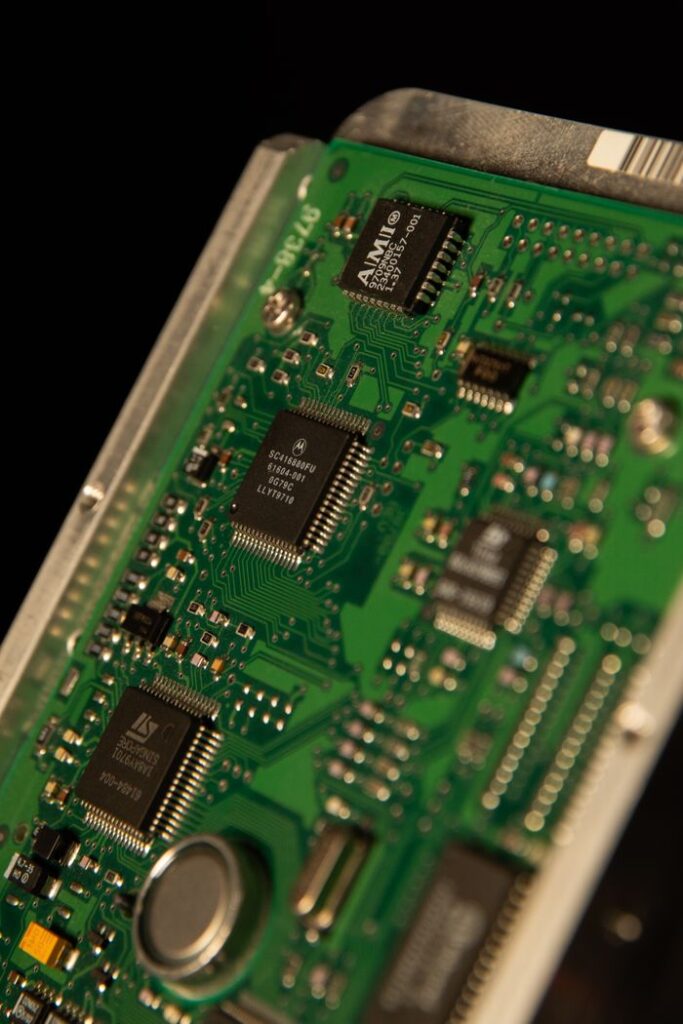
Good Technology Is Often Invisible
Modern electronic products are designed to make complicated processes feel simple.
Press a button.
Tap a screen.
Plug in a cable.
Place your phone on a charger.
From the user’s perspective, these actions are effortless.
But behind them are dozens of systems working simultaneously.
A smartphone may contain:
- Power management circuits
- Sensors
- Communication modules
- Processors
- Memory
- Battery monitoring systems
- Thermal management components
- Multiple PCBs and interconnections
You don’t need to understand any of them to use your phone.
That’s the point.
Good engineering hides complexity from the user.
Your Charger Is a Perfect Example
Take something as ordinary as a charger.
You plug it into a wall and connect your phone.
Simple.
But the charger has to perform several tasks at the same time.
It converts electrical energy, regulates voltage and current, communicates with the connected device, manages heat, and protects against abnormal conditions.
If everything works properly, you don’t notice any of this.
But imagine something goes wrong.
The charger becomes extremely hot.
Charging keeps disconnecting.
The output becomes unstable.
Or the charger stops working completely.
Suddenly, you realize how much technology was quietly working in the background.
This is why charger design is about much more than simply delivering power.

The Same Is True Inside a Wireless Charger
Wireless charging makes the invisible nature of technology even more obvious.
Place your phone on a charging surface, and energy somehow reaches the battery without a physical connection.
To the user, it feels almost effortless.
But underneath that simple experience are:
- Transmitter and receiver coils
- Magnetic field control
- Power electronics
- Communication between devices
- Foreign object detection
- Temperature monitoring
- Alignment considerations
- Charging control algorithms
When everything is working correctly, you simply see a charging icon.
You don’t see the electromagnetic field.
You don’t see the control circuitry.
You don’t see the power conversion taking place.
The technology disappears.
When Thermal Management Stops Working
Heat is another example of technology that usually goes unnoticed.
Electronic components naturally generate heat.
Processors work harder.
Power circuits convert energy.
Batteries charge and discharge.
All of these processes create thermal challenges.
Engineers therefore design products with thermal management systems that help move, distribute, or dissipate heat.
When thermal management works properly, the product simply feels normal.
But when it doesn’t, you notice immediately.
The device becomes hot.
Performance may decrease.
Charging may slow down.
In extreme situations, the system may shut itself down to protect the hardware.
That moment is a reminder that something invisible was working all along.
A Tiny Component Can Have a Huge Job
Modern electronics contain thousands of individual components.
Some are large enough to see easily.
Others are incredibly small.
A tiny capacitor may help stabilize a power supply.
A small sensor may monitor temperature.
A controller IC may manage an entire charging process.
A protection component may only activate when something goes wrong.
And that’s what makes electronic engineering interesting.
Some of the most important components may spend most of their lives doing almost nothing noticeable.
Until the moment they are needed.
A protection circuit might remain completely invisible for years.
Then one abnormal electrical event occurs.
And suddenly, that tiny component becomes one of the most important parts of the entire product.
Reliability Means Preventing Problems You Never See
Good engineering isn’t only about making something work.
It’s about making sure it continues to work when conditions aren’t perfect.
Products may experience:
- High temperatures
- Low temperatures
- Voltage fluctuations
- Mechanical vibration
- Repeated charging cycles
- Long operating hours
- Component aging
A reliable electronic product needs to account for these conditions before they become failures.
That’s why engineers perform testing that users will never see.
A product may undergo temperature testing, electrical testing, aging tests, reliability tests, and repeated operating cycles.
The customer may never know any of this happened.
And that’s perfectly fine.
If the product works reliably, the testing has done its job.
Manufacturing Is Another Invisible Layer
Even a perfect design isn’t enough.
Imagine creating one electronic product that works perfectly.
Now imagine producing 10,000 of them.
The challenge changes completely.
Every component needs to be placed consistently.
Every solder joint needs to meet the required standard.
Every PCB needs to perform within specification.
Every finished unit needs to behave like the original design.
This is where manufacturing processes such as SMT assembly, PCBA testing, inspection, and quality control become critical.
The user doesn’t see these processes.
They only see the final product.
But the reliability of that final product depends heavily on what happened before it reached their hands.
The Best Failure Is the One You Never Notice
Engineers often design systems around failure scenarios that users will hopefully never experience.
What happens if the temperature becomes too high?
What happens if the current suddenly increases?
What happens if a component fails?
What happens if the power supply becomes unstable?
What happens if the device is used continuously for hours?
Good products have answers to these questions.
Protection mechanisms may limit power.
Thermal systems may reduce performance.
Software may shut down a function.
A charging system may stop delivering power.
Ideally, the user never sees any of it.
The product simply protects itself and continues working.
Why Simple Products Can Be So Difficult
This is also why apparently simple products can require enormous engineering effort.
A charging pad may look like a flat piece of plastic.
A power adapter may look like a small box.
A PCB may look like a green board covered with tiny components.
But making these products reliable requires careful decisions at every stage.
The goal isn’t to make the technology visible.
The goal is to make the technology disappear into the experience.
When a product is truly well designed, users don’t think:
“What complicated engineering is happening inside this thing?”
They simply think:
“It works.”
When Technology Becomes Visible
Technology becomes noticeable when the experience breaks.
Your phone suddenly stops charging.
Your wireless charger becomes too hot.
Your device randomly restarts.
Your connection keeps dropping.
Your charger fails after a few months.
These moments are frustrating, but they also reveal something important:
Reliability is not an extra feature. It is part of the product experience.
A product isn’t truly successful because it works once.
It needs to work repeatedly, predictably, and safely.
The Engineering You Never See
Behind every reliable electronic product is a long list of decisions that users will never see.
Which component should be used?
How should the PCB be laid out?
How should heat be managed?
How should the system respond to abnormal conditions?
How should the product be tested?
How can the same quality be maintained across thousands of units?
These questions don’t appear on the product’s packaging.
But they determine what happens after the customer takes the product home.
Final Thoughts
The next time you use an electronic device that simply works, take a moment to appreciate what you don’t notice.
The power management system quietly regulating energy.
The sensors continuously monitoring conditions.
The protection circuits waiting for abnormal situations.
The PCB carrying signals and power.
The manufacturing processes ensuring every unit performs consistently.
The testing designed to find problems before customers do.
That’s the strange thing about good technology.
When it works perfectly, nobody thinks about it.
And perhaps that’s exactly what great engineering is supposed to achieve.
Because the best technology isn’t always the technology that gets noticed.
Sometimes, it’s the technology that quietly works every day—and gives you no reason to notice it.
About Honghao Electronics
At Honghao Electronics, we believe reliable electronics are built around the details that users may never see.
From PCBA and SMT manufacturing to power management, wireless charging technology, product testing, and quality control, we focus on turning engineering concepts into reliable electronic products.
With experience across electronic design and manufacturing, we work with customers from product development and prototyping to mass production, helping create solutions that are practical, stable, and built for real-world use.
Good engineering doesn’t always need to be seen.
It needs to work.