
A charger looks simple.
You plug it into a wall, connect your phone, and your battery starts charging.
There are no moving parts. No complicated controls. No obvious machinery.
But inside that small plastic enclosure, electrical energy is being converted, regulated, monitored, and delivered to your device every second.
And that raises an important question:
What actually makes a charger safe?
Is it the wattage?
The brand?
The certification label?
Or simply the fact that it works?
The answer is more complicated.
A safe charger is the result of multiple layers of engineering working together—from component selection and PCB design to electrical protection, thermal management, and manufacturing quality.
The goal isn’t simply to deliver power.
It’s to deliver the right amount of power, under the right conditions, while protecting both the charger and the device connected to it.
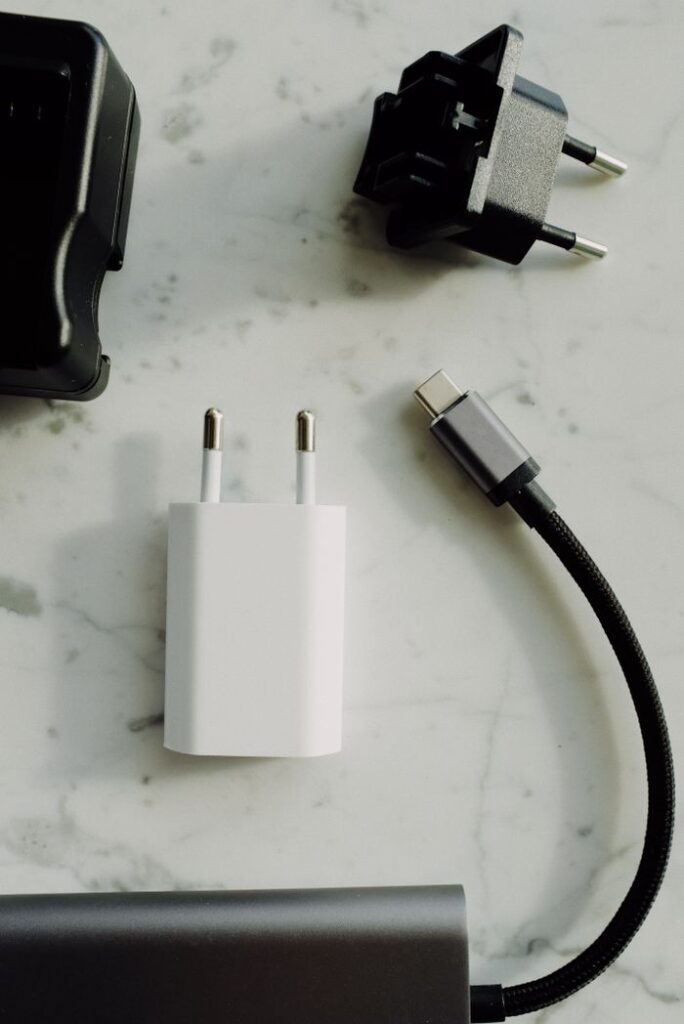
A Charger Does More Than Deliver Electricity
The electricity coming from a wall outlet isn’t suitable for directly charging a smartphone.
A typical charger has to perform several jobs.
First, it converts incoming AC power into DC power.
Then, it regulates that power to the voltage and current required by the connected device.
Modern chargers may also communicate with the device to determine how much power it can safely accept.
This means a charger is essentially a small power conversion system.
Inside, you may find:
- Power conversion circuits
- Transformers or inductive components
- MOSFETs
- Capacitors
- Controllers and ICs
- Protection circuits
- Temperature-sensitive components
- Filtering components
- A printed circuit board (PCB)
Every one of these components has a role to play.
If one part is poorly selected, improperly designed, or incorrectly assembled, the overall safety of the charger can be affected.
1. Overvoltage Protection
One of the most important safety functions is protecting the connected device from excessive voltage.
Electronic devices are designed to operate within specific voltage ranges.
Too much voltage can damage sensitive components.
A well-designed charger continuously regulates its output and includes protection mechanisms that can respond when voltage moves outside safe limits.
Modern charging protocols also allow the charger and device to negotiate appropriate power levels.
Instead of simply pushing maximum power all the time, the system determines what the connected device is capable of handling.
This is one reason modern charging is much smarter than the simple adapters of the past.
2. Overcurrent and Short-Circuit Protection
Voltage isn’t the only concern.
Excessive current can also create serious problems.
If a fault occurs, current may suddenly increase beyond what the circuit was designed to handle.
This can cause excessive heating, component damage, or—in poorly designed systems—more serious safety risks.
That’s why chargers typically include protection against conditions such as:
- Overcurrent
- Short circuits
- Abnormal loads
- Output faults
When something goes wrong, the charger should be able to limit or shut down power instead of continuing to deliver energy into the fault.
This is an important principle in electronic safety:
A good system doesn’t only work when everything goes right. It also knows how to respond when something goes wrong.
3. Thermal Management Matters
Electrical energy isn’t converted with perfect efficiency.
Some energy becomes heat.
As charging power increases, thermal management becomes even more important.
If internal temperatures rise too high, electronic components can become less reliable and battery charging can become more stressful for the connected device.
A safe charger therefore needs to manage heat through a combination of:
- Efficient circuit design
- Appropriate component selection
- PCB layout
- Thermal paths
- Temperature monitoring
- Controlled power output
- Enclosure design
This is particularly important for compact chargers.
The smaller the enclosure, the less space there is to dissipate heat.
Engineers therefore have to balance power, efficiency, size, and temperature at the same time.
4. Component Quality Makes a Difference
A charger can have a beautiful enclosure and impressive specifications, but its internal components still determine much of its actual performance.
Capacitors, switching components, controllers, transformers, protection devices, and other components all have operating limits.
Using components that are poorly matched to the design can create problems with:
- Heat
- Efficiency
- Stability
- Reliability
- Service life
Component selection isn’t simply about choosing the cheapest option that meets a specification.
Engineers also consider factors such as operating temperature, electrical stress, tolerances, reliability, and long-term availability.
This is one of the less visible parts of charger engineering.
Consumers may only see the plastic housing.
Engineers see hundreds of electrical decisions inside it.
5. PCB Design Is Part of the Safety System
The PCB is more than a platform that holds components.
Its layout directly affects how electricity moves through the charger.
Engineers need to carefully consider:
- Current paths
- Component spacing
- Heat distribution
- Grounding
- Signal integrity
- High-voltage and low-voltage separation
- Electromagnetic interference
When dealing with mains-powered equipment, appropriate isolation and spacing between different parts of the circuit are particularly important.
A PCB that works electrically in a prototype may still require significant optimization before it is suitable for mass production.
Small layout changes can affect thermal performance, electrical noise, reliability, and manufacturing consistency.
That’s why PCB design and safety engineering are closely connected.
6. Electromagnetic Interference Matters Too
Safety isn’t only about preventing fires or electrical shocks.
A charger also needs to coexist with the electronics around it.
Switching power supplies generate high-frequency electrical activity. Without appropriate filtering and circuit design, this can create electromagnetic interference (EMI).
Excessive interference can affect nearby electronics or cause a device to behave unexpectedly.
Engineers therefore use filtering components, careful PCB layouts, shielding strategies, and other techniques to control unwanted electrical noise.
A charger that delivers stable power without creating excessive interference is a better-designed charger.
7. Protection Doesn’t Replace Good Design
It’s tempting to think that adding more protection components automatically makes a charger safer.
But safety isn’t simply about adding components.
Protection circuits need to be correctly selected, correctly positioned, and correctly integrated into the overall design.
For example, a protection device may have a specific response time, voltage rating, current rating, and temperature range.
If those characteristics don’t match the rest of the circuit, the protection may not perform as expected.
Good charger design therefore starts with the entire system—not with individual parts.
Safety has to be designed in from the beginning.
8. Testing Is Where Safety Gets Proven
Even a well-designed charger isn’t finished when the prototype works.
Testing is essential.
Depending on the product and its intended market, manufacturers may evaluate areas such as:
- Input and output performance
- Overvoltage protection
- Overcurrent protection
- Short-circuit response
- Temperature rise
- Insulation and isolation
- Charging stability
- Electromagnetic compatibility
- Long-term reliability
Testing also needs to happen during manufacturing.
A design may work perfectly in one prototype, but mass production introduces another challenge:
Consistency.
Thousands of products need to perform like the original design.
That requires controlled SMT processes, component traceability, inspection, functional testing, and quality control.
Why Cheap Chargers Can Be a Risk
Price alone doesn’t determine whether a charger is safe.
A lower-cost product can be perfectly well engineered, while an expensive product can still have design problems.
However, extremely aggressive cost reduction can create pressure to compromise on components, thermal design, testing, or manufacturing controls.
The problem isn’t simply that a charger is cheap.
It’s where the cost was removed.
Good engineering tries to optimize cost without compromising the parts of the design that protect the user and the device.
That’s especially important as chargers become smaller, more powerful, and more complex.
So, What Actually Makes a Charger Safe?
There isn’t one magic component or one number that determines charger safety.
A reliable charger is built from multiple layers:
Good design + quality components + proper protection + thermal management + controlled manufacturing + thorough testing.
Each layer supports the others.
The protection circuit cannot compensate for a fundamentally poor design.
A high-quality component cannot fix an incorrect PCB layout.
And a perfect prototype means little if mass production cannot consistently reproduce it.
Safety is a system.
The Future of Charger Safety
Charging technology is moving toward higher power, smaller form factors, and more intelligent power management.
As a result, charger design will become increasingly sophisticated.
Future charging systems will likely place even greater emphasis on:
- Higher conversion efficiency
- Smarter power negotiation
- Better thermal control
- More compact components
- Real-time monitoring
- Improved protection systems
The challenge will be achieving all of this while keeping chargers small, reliable, affordable, and easy to use.
The best charger may be the one you never think about.
It simply works.
It doesn’t become unnecessarily hot.
It doesn’t interrupt charging unexpectedly.
And it protects your device quietly in the background.
Final Thoughts
A charger may look like one of the simplest accessories in your electronics collection.
But inside that small enclosure is a carefully engineered power system.
From the components and PCB layout to thermal management, electrical protection, testing, and manufacturing quality, dozens of details determine how safely and reliably a charger performs.
At Honghao Electronics, we believe reliable electronic products start with engineering decisions that users may never see.
Whether it is power management, PCBA design, SMT manufacturing, or charging technology, every detail contributes to the final product.
Because when it comes to charging, “it works” is only the beginning.
A truly good charger should work safely, consistently, and reliably—every time you plug it in.