
What Does “100%” Really Mean?
You plug your phone in.
The battery percentage slowly rises:
45% → 60% → 80% → 95% → 100%
Then you see the familiar message:
Fully Charged.
But is the battery really completely full?
Not exactly.
A battery isn’t like a glass of water that can be filled to one precise physical limit.
The 100% shown on your phone is a controlled operating point, determined by the battery’s chemistry, voltage limits, charging system, and battery management software.
So what does “full” actually mean?
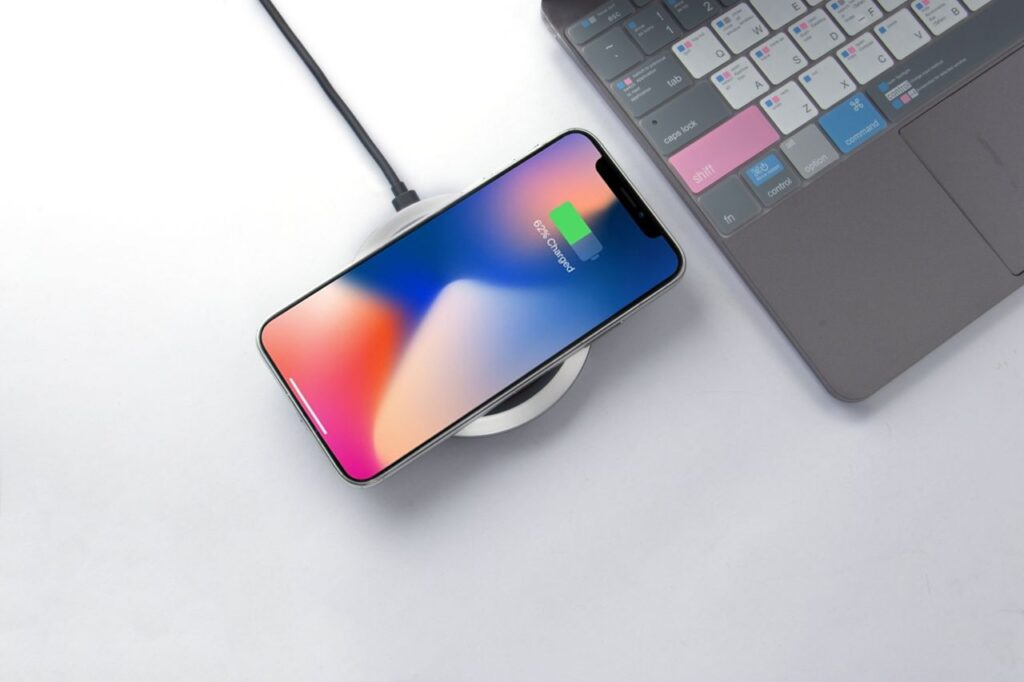
A Battery Doesn’t Have an Unlimited Storage Space
Rechargeable batteries store energy through chemical processes.
In a lithium-ion battery, charging moves lithium ions between the battery’s internal electrode materials.
As charging continues, the battery approaches its designed upper state of charge.
Eventually, the battery reaches a voltage level where continuing to push the same amount of current would no longer be appropriate.
At this point, the charging system changes its behavior.
Instead of simply increasing the amount of energy going into the battery, it carefully controls the charging process.
Full charge is therefore a controlled condition—not an unlimited amount of stored energy.
Why Does Charging Slow Down Near 100%?
You’ve probably noticed this yourself.
Your phone may charge relatively quickly from 20% to 70%.
But the final part can feel much slower.
That’s intentional.
Lithium-ion charging commonly involves two major stages:
Constant Current → Constant Voltage
During the earlier stage, the battery can accept relatively high charging current.
As the battery approaches its upper voltage limit, the charger maintains the voltage while gradually reducing the current.
This is why the last part of charging takes longer.
The system is prioritizing controlled charging rather than simply pushing maximum power.
100% Is a System Decision
The percentage displayed on your phone isn’t a direct measurement of the exact amount of energy stored inside the battery.
The battery management system estimates the battery’s state of charge using information such as voltage, current, temperature, and battery behavior.
The system then translates that information into a percentage that users can understand.
So when your phone says 100%, it means:
“The battery has reached its defined full-charge state.”
It doesn’t necessarily mean that every possible chemical reaction inside the battery has been pushed to an absolute physical maximum.
Why Not Charge Beyond 100%?
Because more isn’t always better.
Operating a battery beyond its designed voltage or charging limits can cause unwanted chemical reactions, additional heat, and accelerated degradation.
That’s why charging systems carefully control voltage and current.
Once the battery reaches its intended upper limit, the system reduces charging power and eventually stops the normal charging process.
This is one of the most important jobs of battery management.
The charger doesn’t simply ask how much energy the battery can take. It determines how much energy it should receive under the current conditions.
Temperature Changes the Equation
Battery temperature also matters.
Charging generates some heat, and higher charging power can increase thermal stress.
If the battery becomes too warm, the charging system may reduce power to keep the temperature under control.
This means two identical phones may not always charge at exactly the same speed.
A cooler battery and a warmer battery can receive different charging power.
The same principle applies to battery age and operating conditions.
Charging isn’t a fixed process.
It responds to the condition of the battery.
Does 100% Mean Maximum Battery Life?
Not necessarily.
Keeping a lithium-ion battery at a very high state of charge for long periods can contribute to battery aging.
That’s one reason some modern devices offer features such as optimized charging or charge limits.
Instead of always charging to 100%, a device may stop at a lower level during certain situations and finish charging closer to when you are expected to use it.
The goal is not to prevent you from reaching 100%.
It’s to reduce unnecessary time spent at a high state of charge.
“Full” Is About Balance
Battery charging involves several competing goals:
Charging speed
Battery health
Temperature
Safety
Available capacity
Pushing charging speed too far can increase heat.
Maximizing stored energy can mean operating closer to the battery’s upper limits.
Reducing charging power can improve thermal control but increase charging time.
There is no single setting that maximizes everything.
Good charging systems find a practical balance.
So, Can a Battery Really Be Fully Charged?
Yes—but “fully charged” has a more technical meaning than it sounds.
It means the battery has reached the charging system’s defined upper state of charge under the current conditions.
The system has determined that continuing normal charging is no longer necessary or appropriate.
So the next time your phone reaches 100%, don’t imagine a tiny battery inside your phone being filled to the absolute brim.
Think of it more like this:
The battery has reached its designed destination.
The charging system knows when to slow down, when to stop, and when to protect the battery.
Final Thoughts
A battery’s 100% isn’t simply a number.
Behind it are battery chemistry, voltage limits, temperature monitoring, charging algorithms, and battery management systems working together.
That’s why modern charging is much smarter than:
Plug in → Add energy → Stop at 100%.
The system continuously decides how much power the battery should receive and when charging should change.
So, can a battery really be “fully” charged?
Yes—but full doesn’t mean unlimited.
It means the battery has reached the right level for the system to say:
“That’s enough.”
About Honghao Electronics

At Honghao Electronics, we focus on the power-management technologies behind reliable electronic products.
From PCBA and SMT assembly to wireless charging, charging circuits, power management, and product testing, we help develop solutions designed to balance charging performance, efficiency, thermal control, and reliability.
Because good charging technology isn’t about putting in as much power as possible.
It’s about knowing exactly when enough is enough.