In a bustling office or a high-end hotel lobby, a spill is not a question of “if,” but “when.” For integrated electronics, a single latte can mean a short circuit, permanent hardware damage, or even a fire hazard.
B2B buyers often ask: “Can a wireless charger survive a coffee spill?” The answer depends entirely on the architecture of the installation. At Shenzhen Honghao Electronic Technology (泓浩电子), we have spent years engineering solutions that don’t just “resist” water—they bypass the risk entirely through advanced PCBA design and long-distance induction technology.
Section 1: The Physics of a Spill—Why Liquids Kill Standard Electronics
When coffee or water hits a standard desktop wireless charger, three things happen almost instantly:
Capillary Action: Liquid seeps into the seams between the plastic housing and the charging pad.
Ionic Conductivity: Coffee is conductive. It creates “bridges” between traces on the PCBA, leading to short circuits that can fry the controller IC.
Corrosion: Even if it dries, the residues from sugar and milk lead to long-term corrosion of the copper coils and solder joints.
For a furniture manufacturer, a dead charger isn’t just a $20 loss—it’s a service call, a disgruntled client, and potential damage to a $2,000 designer table.
Section 2: The “Invisible” Advantage—30mm Long-Distance Technology
The most pragmatic way to survive a spill is to not be there when it happens.
2.1 Physical Isolation via Sub-Surface Installation
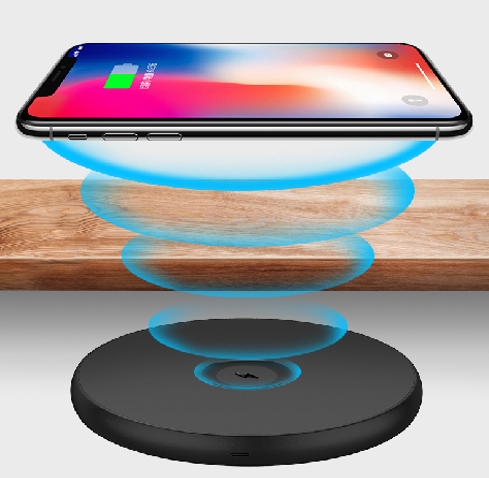
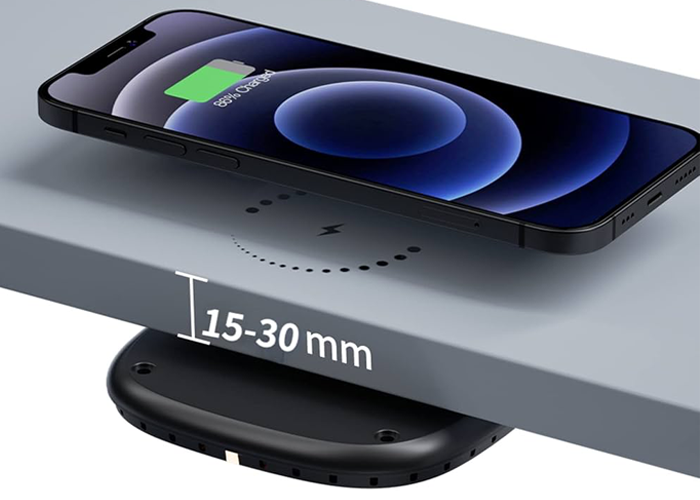
Our flagship 28mm and 30mm long-distance chargers are installed underneath the tabletop.
The Science: Because the energy transfers through the solid material (wood, marble, or glass), the desktop remains perfectly sealed.
The Practical Result: A user can spill a full cup of hot coffee directly over the charging spot. Since there is no hole in the table and no exposed electronics, you simply wipe the table clean. The Honghao PCBA remains bone-dry and functional 20mm below the surface.
2.2 No Grooves, No Problems
Standard “flush-mount” chargers require a hole to be cut, creating a “pool” where liquids collect. Our integrated production line focuses on high-power induction that penetrates solid surfaces, eliminating the need for risky desktop cutouts.
Section 3: Engineering for Resilience—What’s Inside a Honghao PCBA?
Even for our 3-12mm embedded modules that sit closer to the surface, we apply industrial-grade protection that sets us apart from consumer-grade “trading company” goods.
3.1 Conformal Coating & Sealing
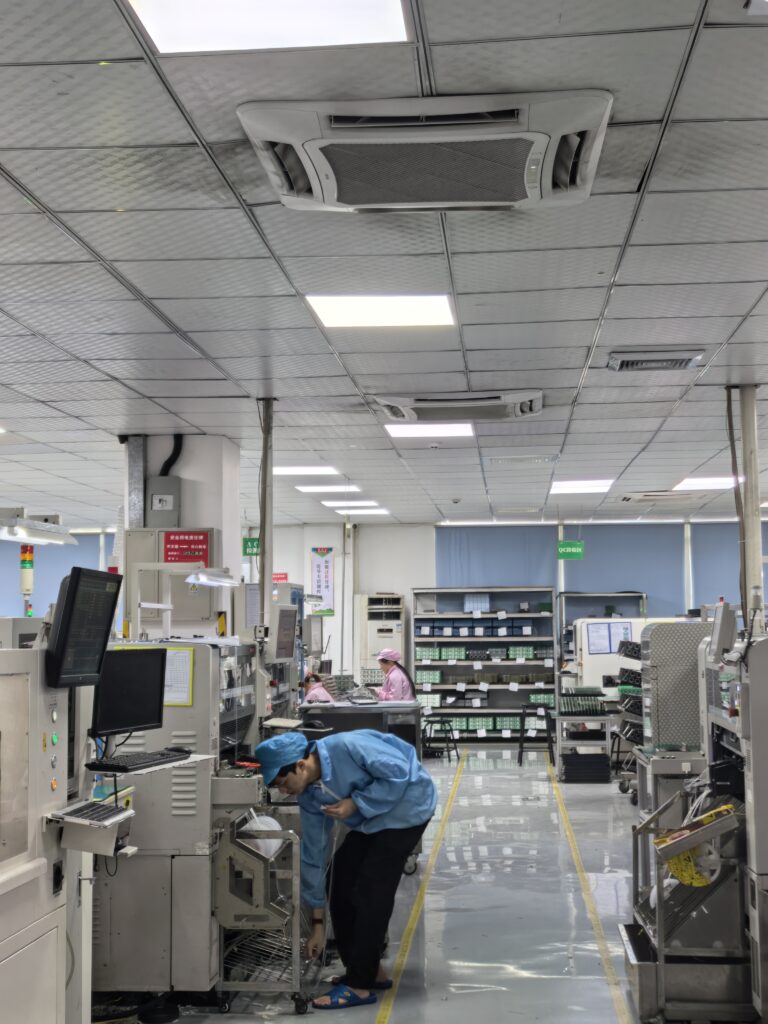
In our SMT facility, we have the capability to apply conformal coatings—a thin polymeric film that conforms to the circuit board components.
Why it matters: This provides a moisture barrier. If humidity or a minor leak reaches the board, the protective layer prevents the liquid from touching the live circuitry.
3.2 Precision SMT Verified by 4D AOI
A spill causes the most damage when solder joints are weak or “porous.”
Our Process: Using the Jutze 4D AOI (Automated Optical Inspection) we photographed in our workshop, we ensure every solder joint is high-density and void-free. A perfectly sealed solder joint is significantly more resistant to environmental oxidation caused by liquid exposure.
3.3 Unicomp X-Ray: Checking the Hidden Seals
For our high-power 30mm chargers, heat management is key. If a charger runs too hot, the plastic casing can warp, creating gaps for liquid to enter. We use Unicomp X-Ray NDT to ensure our thermal pads and components are perfectly aligned, keeping the unit cool and the structural integrity of the housing intact.
Section 4: Case Study—The “Latte-Proof” Hotel Renovation
Last year, a boutique hotel chain replaced 200 bedside “pop-up” chargers with our Honghao 28mm invisible chargers.
The Problem: They were losing 15% of their chargers annually due to guest spills.
The Solution: We installed our long-distance modules under the granite nightstands.
The Result: 14 months later, zero failures reported. Even with daily cleaning with wet cloths and the occasional spilled drink, the chargers remain in factory condition.
Section 5: Beyond Water—The Durability of Integrated Production
Surviving a spill is a proxy for overall build quality. A factory that invests in SMT First Article Inspection (FAI) and X-Ray NDT—like Honghao—is a factory that cares about the “unseen” variables.
When you source from us, you aren’t just getting a PCBA; you are getting:
Protocol Stability: Our boards won’t “glitch” when they detect the moisture of a damp cloth (thanks to advanced FOD algorithms).
Thermal Safety: Built-in NTC thermistors shut down the unit if a spill causes an abnormal temperature spike.
Certified Reliability: Every batch is aged and tested to ensure it meets the rigors of B2B environments.
Conclusion: Stop Worrying About the Mess
Can a wireless charger survive a coffee spill? If it’s a Honghao Under-Desk Charger, the answer is a resounding yes. By moving the technology away from the “splash zone” and reinforcing our PCBAs with world-class SMT equipment, we provide the most resilient power solutions on the market.
Don’t let a 10-cent cup of coffee ruin your $1,000 furniture investment. Choose integrated, invisible, and industrial-grade.
Build a "Latte-Proof" Workspace Today
Don’t let a spilled coffee ruin your furniture investment. Explore our range of industrial-grade, hidden wireless charging modules designed for durability and performance.