
If It Works, Why Test It Again?
Imagine an engineer builds a new electronic product.
It turns on.
The buttons work.
The display works.
It charges normally.
Everything looks perfect.
So why put it through another round of testing?
Because working once doesn’t prove that a product is reliable.
A prototype can work perfectly on a laboratory bench and still fail after hours of operation.
A charger can work normally at room temperature but behave differently when it gets hot.
A PCB can pass an initial functional test but develop problems after repeated use.
A product can even work perfectly in one unit while another unit from the same production line has a completely different problem.
Testing exists to find these differences.
The purpose of testing isn’t to prove that a product can work.
It’s to discover how well it continues to work.
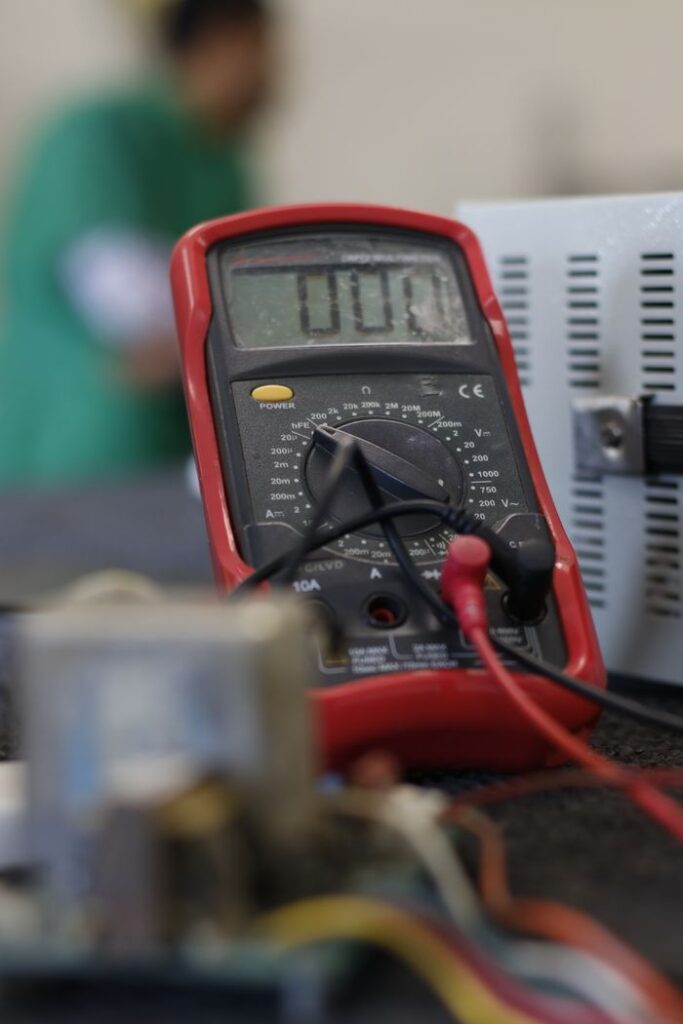
“It Works” Is Only the Beginning
When engineers say a product works, they usually mean that it performs its intended function under specific conditions.
But real products don’t live in perfect conditions.
They experience:
- Different temperatures
- Different input voltages
- Long operating periods
- Repeated use
- Mechanical stress
- Component variation
- Manufacturing tolerances
- Unexpected operating conditions
A product designed for everyday use has to deal with much more than a quick demonstration.
That’s why testing asks a much bigger question:
What happens when conditions change?
A Product Can Pass One Test and Fail Another
Consider a simple charger.
It may successfully charge a phone.
That proves the basic function works.
But engineers may still want to know:
What happens after several hours?
What happens when the input voltage changes?
What happens when the temperature rises?
What happens if the load suddenly changes?
What happens when the charger is connected and disconnected repeatedly?
These are different questions.
A functional test may answer:
“Can it charge?”
A reliability test asks:
“Can it keep charging correctly under different conditions?”
That’s a much harder problem.
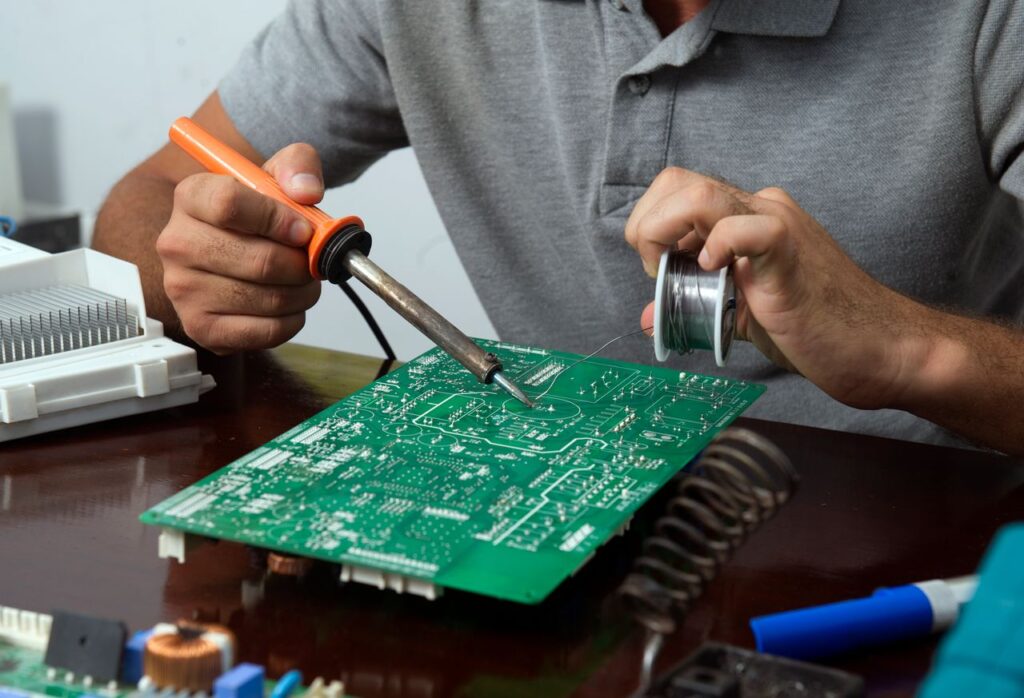
Testing Looks for What Users Can’t See
Many electronic failures aren’t immediately visible.
A PCB may look perfectly normal while having a weak solder joint.
A component may function correctly but operate at an unexpectedly high temperature.
A power circuit may work normally but become unstable under a particular load.
A connector may work perfectly during initial testing but degrade after repeated insertion and removal.
This is why visual inspection alone isn’t enough.
Electronic testing allows engineers to look at electrical and functional behavior that users simply can’t see.
Why Test the Same Product Thousands of Times?
Mass production creates another challenge:
Consistency.
Imagine producing 10,000 identical electronic products.
They are supposed to be the same.
But manufacturing involves thousands of components, machines, processes, and environmental variables.
Even small variations can occur.
Testing helps identify products that don’t meet the required specifications.
It also helps manufacturers understand whether the production process itself is stable.
The goal isn’t simply to find defective products.
It’s to find patterns.
If a certain type of failure appears repeatedly, engineers can investigate the underlying production process.
Testing Can Reveal Manufacturing Problems
Sometimes the product design is perfectly fine.
The problem is in manufacturing.
For example, an issue may come from:
- Incorrect component placement
- Poor soldering
- Component variation
- PCB defects
- Assembly errors
- Inconsistent production parameters
This is where PCBA testing and SMT inspection become especially important.
A circuit may look correct on the drawing.
But the physical product still needs to prove that it was assembled correctly.
Testing creates a connection between engineering design and actual manufacturing.
Temperature Changes Everything
Temperature is one of the biggest challenges in electronics.
Electronic components generate heat during operation.
Some environments are hot.
Others are cold.
And products may need to operate across a wide temperature range.
A product that performs perfectly at 25°C may behave differently at a much higher temperature.
This is why engineers may perform temperature-related testing to understand:
- Thermal performance
- Component stability
- Charging behavior
- Power consumption
- Protection mechanisms
- Long-term reliability
Heat doesn’t just affect comfort.
It can affect the behavior and lifetime of electronic components.
Reliability Testing Takes Time
Some problems don’t appear immediately.
A component may work for one hour.
It may still work after ten hours.
But what happens after hundreds or thousands of hours?
This is where reliability testing becomes important.
Engineers may operate products continuously or repeatedly to identify potential weaknesses.
The goal is to understand how the product behaves over time.
In other words:
A product isn’t reliable because it survives the first day.
Reliability means it continues to perform as expected throughout its intended service life.
What About Products That Never Fail?
Interestingly, a successful test doesn’t necessarily mean engineers have “proven” that a product will never fail.
That’s not really possible.
Testing reduces uncertainty.
It gives engineers evidence about how a product behaves under known conditions.
The more carefully a product is tested, the more confidence manufacturers can have in its performance.
This is an important distinction.
Testing doesn’t eliminate uncertainty.
It helps engineers understand and control it.
Different Tests Answer Different Questions
There isn’t one universal test that can tell engineers everything.
Different tests are designed for different purposes.
Functional Testing
Does the product perform its intended functions?
Electrical Testing
Are voltage, current, resistance, and other electrical parameters within specification?
Thermal Testing
How does the product behave as temperature changes?
Reliability Testing
Can it continue operating over time?
Safety Testing
How does it respond to abnormal or potentially hazardous conditions?
Production Testing
Can every manufactured unit meet the required specifications?
Each test provides another piece of information.
Together, they create a much clearer picture of product quality.
Testing Is Also About Prevention
One of the biggest benefits of testing happens before a customer ever sees the product.
Suppose engineers discover that a component becomes unusually hot under a particular operating condition.
They can investigate it.
Maybe the component needs to be changed.
Maybe the PCB layout needs adjustment.
Maybe the thermal design needs improvement.
Maybe the power management system needs to limit the operating condition.
The problem has been discovered before it becomes a field failure.
That’s one of the most valuable things testing can do:
Find problems while they are still easy to fix.
Testing Doesn’t End With Development
Testing isn’t something that happens only once during product development.
It can continue throughout the product lifecycle.
During development, testing helps engineers refine the design.
During pilot production, it helps validate the manufacturing process.
During mass production, it helps control consistency.
During quality inspection, it helps verify finished products.
And when a field problem appears, testing can help engineers identify its root cause.
Testing is therefore not a single step.
It’s part of the entire product development and manufacturing process.
The Best Test Is Sometimes the One You Never Hear About
Customers rarely think about product testing.
If a device works correctly for years, nobody asks:
“How many tests did this product pass?”
That’s because testing is largely invisible.
Its success is often measured by the absence of problems.
A charger that doesn’t overheat.
A PCB that doesn’t fail unexpectedly.
A wireless charger that performs consistently.
A product that works the same way after months of use.
These are the results of testing that most users never see.
And that’s exactly how it should be.
Testing Makes Quality Repeatable
A good electronic product isn’t defined only by the best unit that comes off a production line.
Quality means being able to produce consistent results again and again.
That’s why testing and quality control are so closely connected.
Testing provides measurable information.
Quality control uses that information to determine whether the product and process meet requirements.
Together, they help turn engineering specifications into repeatable manufacturing results.
Final Thoughts
So, why do engineers test products that already work?
Because “working” is only one requirement.
A reliable product also needs to work:
Consistently.
Safely.
Efficiently.
Under different conditions.
And over time.
Testing helps engineers discover what isn’t obvious during normal operation.
It finds weaknesses.
It reveals manufacturing variations.
It validates design decisions.
And most importantly, it gives engineers an opportunity to fix problems before customers experience them.
That’s why a product isn’t finished when it works for the first time.
It’s finished when engineers understand why it works—and have confidence that it will keep working.
About Honghao Electronics
At Honghao Electronics, testing is an important part of turning electronic designs into reliable products.
From PCBA and SMT assembly to functional testing, electrical testing, reliability verification, and quality control, we focus on identifying potential problems before products reach the market.
Because reliable electronics aren’t created simply by making them work.
They’re created by testing how well they continue to work.